Want to be in the loop?
subscribe to
our notification
Business News
CONCERNED FOR NEXT ECONOMIC GOALS
Abnormalities in balance of payments
According to the macroeconomic report for the first quarter of 2016 released by the Vietnam Institute for Economy and Policy Research (VEPR) under the Vietnam National University of Hanoi, the balance of payments showed signs of abnormality. Currency flows running to foreign nations in the form of offshore deposits surged from the third quarter of 2015 after China devalued its yuan in August. The currency outflow caused the overall balance of payments to move from equilibrium to a big deficit, amounting to US$6.6 billion in the third quarter of 2015 due to the reversion of financial balances. Thus, it is clear that foreign exchange policies of Vietnam caused side effects that needed to be watched closely.
According to VERP, abnormalities in the balance of payments need to be monitored closely and forecast timely. It is worth noting that two important components of the financial balance - the flows of foreign direct investment and foreign indirect investment - did not have significant fluctuations while the withdrawal of foreign exchanges by commercial banks in the same period did not have major changes. With these anomalies, was this a so-called "liquidity trap"? Banks needed to pay high attention to these.
VERP thought that if the assumption of "liquidity trap" is true, offshore money deposits in foreign banks may continue to increase in the coming period after the interest rate on US dollars was brought to zero as per the decision of the Governor of the State Bank of Vietnam (SBV) on September 25, 2015.
Pham Van Dai, chief analyst of VERP Macro Research Group, said, by imposing the zero-interest rate on the greenback, SBV completely eliminated motivations of placing termed foreign currency deposits at banks among the public. Therefore, most deposits have born no terms.
The SBV’s anti-dollarisation policy is completely right but this measure must be taken consistently while other policies are needed to build up the confidence in the local dong. Only by doing so does the economy use offshore foreign currency deposits, said Dai.
Government needs to focus on stronger reform
VERP Director Nguyen Duc Thanh warned that the budget deficit is very serious and unlikely to improve soon since, according to estimates by the Government, the deficit ratio is 6.34 per cent, not 5 per cent as expected by the lawmaking National Assembly.
Economist Le Dang Doanh also expressed his worry that this is becoming a bad precedent since the long deep budget deficit has become ever more serious. Coupled with rising public debt, this will cause negative implications on the economy in the long term.
Given growing budget deficit, authorities must resort to conventional tools like taking any source of income in the time of increasing borrowing and issuing bonds to offset losses. Once applied, these measures will not only push up public debt but also cause huge pressures on interest rate since bond yields must be alluring enough to catch the interest of investors.
Domestic companies are faced with numerous difficulties arising from growing input costs coupled with rising interest rates, taxes and fees let alone higher informal courses than earlier. This reality, if continued without fixing macroeconomic measures, will result in an increasing number of bankrupt or dissolved companies.
Former Trade Minister Truong Dinh Tuyen said economic growth missed the target while increasing public debt resulted in a shrinking policy space, leading to a very narrow room for changes. The economy is currently lacking solid development while returned inflation will affect sentiment and confidence in the market.
He said that if the economy is really restructured, growth will slow in the initial phase, but this reduction is healthy and assured of the future sustainable development. If Vietnam can do this, the year 2016 will not be as favourable as in 2015 but there will not have much pessimism.
“Actual restructuring will require growth sacrifice in the short term but it will produce sustainable development in the long term. Moreover, if the Government really takes drastic reforms, companies will enjoy many advantages, and that is what is expected in the new cabinet,” he added.
Sharing the viewpoint with former Trade Minister Tuyen, many economists suggested the Government of Vietnam not be anxious to chase after high growth because this can lead to more risks to the economy. Instead, it should focus on promoting real reforms and consider it a way to make an impression in the new administration term.
Source: VCCI
Related News
BANKING / FINANCE / INSURANCE / TAX
REMITTANCES TO HCM CITY RISE NEARLY 40% IN Q3
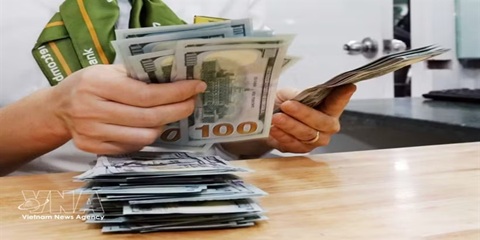
Remittances to HCM City reached more than US$2.83 billion in the third quarter of this year, up 39.5 per cent from the previous quarter and 3.6 per cent year-on-year. This was the first quarter showing positive annual growth this year, helping narrow the decline in remittance inflows over the first nine months. According to the State Bank of Vietnam (SBV)’s Regional Branch 2, remittances transferred to HCM City through credit institutions and economic organisations totalled $2.835 billion in Q3, an increase of more than $802 million from the previous quarter.

TECHNOLOGY
TECH SECTOR GROWTH OPENS UP OPPORTUNITIES FOR VIỆT NAM TO GO GLOBAL
The growth of the electronics, semiconductor and high-tech sectors worldwide is opening up a variety of opportunities for Vietnamese enterprises to integrate more deeply into the global supply chain. However, to become suppliers for these corporations, domestic enterprises must meet rigorous standards regarding quality, technology, productivity and order fulfilment capabilities.
VIETNAM ECONOMY INVESTMENT
FOREIGN INVESTORS SEEKING A SYNCHRONISED MANUFACTURING ECOSYSTEM
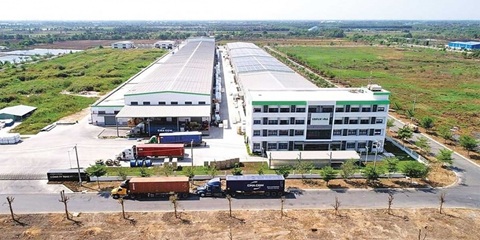
Instead of focusing only on land costs and incentives as usual, foreign investors are seeking a synchronised manufacturing ecosystem, from stable power supply and logistics to shared infrastructure and the convenience of completing residence procedures for experts to serve their long-term investment in the country.
MEMBER CORNER / PROMOTIONS
SENTRYSAFE FHW40200 – PROTECT YOUR VALUABLES, ENJOY PEACE OF MIND!
Looking for a reliable solution to protect your important documents, cash, and valuables from fire and water damage? Genuine SENTRYSAFE - Reliable protection for your valuables and peace of mind! Contact Sen Wai Vietnam for more information and personalized product recommendations.
PROPERTY / INDUSTRIAL ZONE
HCM CITY ATTRACTS US$5.7 BILLION INTO EXPORT PROCESSING AND INDUSTRIAL ZONES
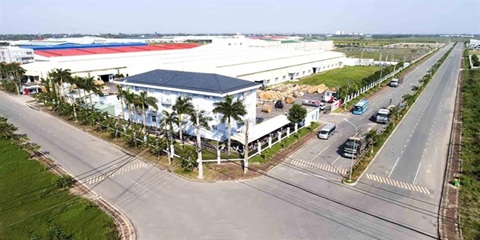
HCM City attracted US$5.7 billion in domestic and foreign investment into its export processing and industrial zones during the first nine months of 2026. The figure exceeded the city's full-year target by 31 per cent, highlighting strong momentum in high-quality industrial investment under Resolution No.10-NQ/TW. Total investment reached 131 per cent of the 2026 target of $4.25 billion and represented a 29 per cent increase compared with the same period in 2025, according to the city's Export Processing and Industrial Zones Authority (HEPZA).
INFRASTRUCTURE / CONSTRUCTION / LOGISTIC / PORT
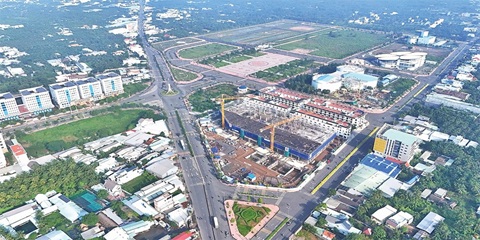
DONG THAP PROVINCE STEPS UP INDUSTRIAL EXPANSION AND INFRASTRUCTURE CONNECTIVITY
Accelerating public investment, strengthening inter-regional connectivity, and expanding industrial land are helping Dong Thap efficiently bolster competitiveness and drive economic growth. Following the 2025 merger of the former Dong Thap and Tien Giang provinces, the expanded Dong Thap province in the Mekong Delta faces mounting pressure to accelerate infrastructure development and strengthen connectivity among local economic zones, urban areas, industrial parks (IPs), and production centres.
Events Sponsors






















